Contractor in Bucks County, Pennsylvania

Bathroom Vanity Styles:
Which One Is Right for Your Space?

Bathroom Vanity Styles: Which One Is Right for Your Space?

The vanity is arguably the most important fixture in any bathroom. It anchors the room, sets the design tone, and has to work hard every single day. But with so many styles on the market — floating, freestanding, built-in, vessel sink, double — choosing the right one can feel overwhelming.

Whether you’re planning a full bathroom renovation or simply looking to update a tired space, understanding the differences between vanity styles will help you make a decision you’ll love for years to come.

This guide breaks down the most popular bathroom vanity styles, their pros and cons, and how to match them to your space, lifestyle, and budget.

Why Your Vanity Style Matters More Than You Think

A bathroom vanity isn’t just about looks. It affects storage, daily functionality, cleaning ease, and even how spacious your bathroom feels. The right style can make a small bathroom appear larger, bring warmth to a cold modern space, or add a timeless elegance that holds up over decades.

Beyond aesthetics, vanity style also influences your renovation budget. A freestanding unit with a prefab top costs far less than custom cabinetry built into the wall. Knowing your priorities upfront — storage vs. style, budget vs. luxury — will guide every decision that follows.

If you’re also thinking about the bigger picture, exploring whole-home renovation planning can help you align your bathroom update with other upgrades happening around the house.

The Most Popular Bathroom Vanity Styles

1. Freestanding Vanities

Freestanding vanities are the classic choice. They sit directly on the floor and typically come as a complete unit — cabinet, countertop, and sink. They’re widely available in a range of styles from traditional to contemporary, making them one of the most flexible options on the market.

Best for: mid-size to large bathrooms, homeowners who want easy installation or future replacements, and anyone who loves a traditional or transitional aesthetic.

Pros:

  • Easy to install and replace
  • Wide range of price points and styles
  • Often include ample built-in storage
  • No wall reinforcement required

Cons:

  • Can feel bulky in tight spaces
  • Floor cleaning around and underneath can be tricky

2. Floating (Wall-Mounted) Vanities

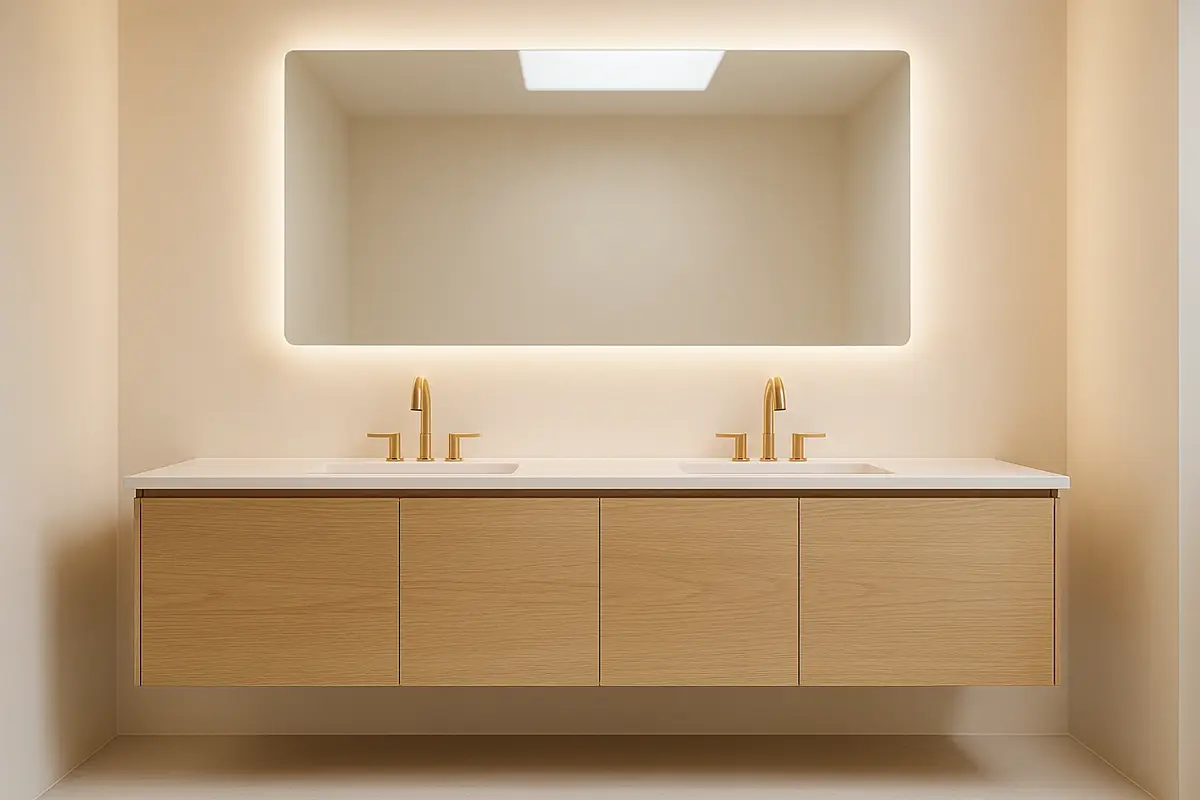
Floating vanities are mounted directly to the wall, leaving the floor completely clear below. This creates a clean, open look that makes any bathroom feel more spacious — a major advantage in smaller bathrooms.

They’re a staple of modern and minimalist design, and they pair beautifully with large-format tile, frameless glass showers, and sleek hardware. If you’re planning a full bathroom remodel with a contemporary direction, a floating vanity deserves serious consideration.

Pros:

  • Opens up the floor and makes rooms look bigger
  • Easier floor cleaning — just a mop or cloth underneath
  • Height can be customized during installation
  • Strong modern aesthetic

Cons:

  • Requires sturdy wall blocking or reinforcement — plumbing and wall prep add to cost
  • Less storage than comparable freestanding units
  • Not ideal for period or traditional-style homes

3. Built-In (Furniture-Style) Vanities

Built-in vanities are custom-fitted into the bathroom, often designed to look like fine furniture. Think Shaker-style cabinets, bead-board paneling, or integrated shelving that wraps around the sink.

This style is popular in farmhouse, craftsman, and transitional bathrooms. It offers the most storage of any vanity type and creates a seamless, tailored look that feels intentional and high-end.

Pros:

  • Maximum storage and customization
  • Can be designed to fit awkward layouts or unusual dimensions
  • Adds significant value to the home
  • Timeless, furniture-grade appearance

Cons:

  • Higher cost — requires skilled carpentry and custom fabrication
  • Longer installation time
  • Harder to replace or update without significant work

4. Vessel Sink Vanities

Vessel sink vanities feature a bowl-style sink that sits on top of the countertop rather than being integrated into it. They function more like a piece of art than a traditional fixture and are common in powder rooms, guest baths, and spa-inspired master bathrooms.

The visual impact is undeniable, but vessel sinks come with practical considerations. They require taller vanity cabinets and specific faucet heights, and they can be less comfortable for frequent daily use by shorter users or children.

Pros:

  • Strong visual statement — great for accent spaces like powder rooms
  • Wide variety of materials: stone, ceramic, glass, copper
  • Pairs well with minimalist cabinet designs

Cons:

  • More splashing and water around the sink area
  • Not the most ergonomic for daily use
  • Requires careful faucet selection

5. Double Vanities

A double vanity includes two sinks set in a single countertop — usually on a long vanity base. It’s the go-to choice for shared master bathrooms, eliminating the morning rush and giving each person their own space.

Double vanities can be freestanding, floating, or built-in, so you’re not limited stylistically. The main requirement is enough space — most double vanities need at least 60 inches of wall width to work comfortably.

Pros:

  • Ideal for shared bathrooms — reduces morning conflicts
  • More counter space and storage per person
  • Adds luxury appeal and resale value

Cons:

  • Requires significant wall width — not suitable for small bathrooms
  • Higher plumbing costs with two drains and supply lines

How to Choose the Right Vanity Style for Your Bathroom

With so many options, narrowing things down comes down to a few key factors:

Bathroom Size — Small bathrooms benefit most from floating vanities that free up floor space. Larger bathrooms can accommodate freestanding or double units without feeling cramped.

Overall Design Direction — Modern and minimalist bathrooms call for floating or vessel sink styles. Traditional and farmhouse aesthetics align naturally with freestanding or furniture-style built-ins.

Storage Needs — If you need to store toiletries, towels, and supplies under the sink, a freestanding or built-in vanity with full cabinet depth will serve you best.

Budget — Prefab freestanding units are the most budget-friendly. Custom built-ins cost more but deliver a truly personalized result.

Who Uses the Bathroom — A guest powder room can prioritize drama over function. A family bathroom needs durability, easy cleaning, and accessible design.

It also helps to think about how your vanity choice connects to other elements in the room — tile, lighting, hardware, mirrors. If you’re overhauling windows or adding natural light as part of a broader project, a window installation upgrade can complement the brightness a new vanity brings to the space.

Vanity Materials and Finishes Worth Knowing

Once you’ve landed on a style, the material choices for your countertop and cabinet finish matter just as much.

Quartz — Highly durable, non-porous, and available in virtually any color. One of the top choices for busy bathrooms.

Marble — Luxurious and timeless, but requires regular sealing to prevent staining in a wet environment.

Solid Wood — Beautiful for a furniture-style look, but needs proper sealing and ventilation to resist moisture warping.

PVC/Thermofoil — Budget-friendly and highly moisture-resistant. Works well in high-humidity environments.

Painted MDF — Common in builder-grade vanities. Looks clean but can chip over time if not properly finished.

Hardware finishes — matte black, brushed nickel, brass — should tie into your faucet and light fixture choices. Mixing metals intentionally can look elevated; mixing them accidentally looks unfinished.

Don't Overlook the Plumbing Side

Every vanity style change has plumbing implications. Switching from a freestanding unit to a floating wall-mount often means relocating drain lines and supply connections. Adding a second sink requires running new plumbing to accommodate both basins.

Working with a qualified contractor ensures this work is done correctly, with proper waterproofing behind walls and code-compliant connections. If your bathroom is part of a larger project that includes drain cleaning or plumbing upgrades, coordinating with experienced local plumbing professionals will keep everything on schedule.

How Vanity Updates Connect to Broader Kitchen and Home Projects

Bathroom updates rarely happen in isolation. Homeowners who upgrade their vanity often find themselves reconsidering tile, lighting, mirrors, and eventually the kitchen — especially when a cohesive design vision starts to take shape. If that resonates, exploring kitchen remodeling options alongside your bathroom work can lead to better design consistency and potential cost savings when projects are bundled.

For those considering a more comprehensive approach, full home remodeling services allow you to plan multiple rooms at once, align timelines, and avoid the disruption of repeated construction phases.

You might also find value in reading our guide on planning a home renovation timeline — it covers how to sequence projects like a bathroom vanity upgrade within a broader remodeling schedule to avoid delays and cost overruns.

If your project includes cabinet work or woodworking, the insights in our piece on cabinet refacing vs full replacement may apply to vanity cabinetry decisions as well.

Frequently Asked Questions

Floating (wall-mounted) vanities are currently among the most sought-after styles, particularly in modern and transitional bathrooms. Their clean lines, open floor appearance, and ease of cleaning make them a top choice in new construction and renovation projects alike.
Focus on a wall-mounted or floating vanity to visually open the floor space. Choose a single-sink design with built-in storage below, and opt for lighter finishes and a simple countertop to keep the visual weight minimal. Avoid oversized units that will crowd the room.
In many cases, yes — especially if you're swapping one freestanding vanity for another of similar size and configuration. However, switching styles (for example, going from freestanding to wall-mounted) almost always requires some plumbing adjustments to reposition the drain and supply lines.
Quartz is widely considered the best all-around material for bathroom vanities because it is non-porous, highly durable, stain-resistant, and requires almost no maintenance. Natural stone like marble offers beauty but needs regular sealing. For a budget-conscious choice, cultured marble or laminate hold up well in low-traffic bathrooms.
A straightforward vanity swap — same size, same configuration — typically takes one to two days including plumbing reconnection and finishing. More complex projects involving new plumbing runs, wall modifications, or custom cabinetry can take several days to a week as part of a broader bathroom remodel.
If your bathroom is shared and has at least 60 inches of usable wall width, a double vanity is worth the investment. It reduces morning conflicts, adds more counter space, and significantly boosts the resale appeal of a master bathroom. For guest baths or powder rooms, a well-designed single vanity is almost always the better fit.