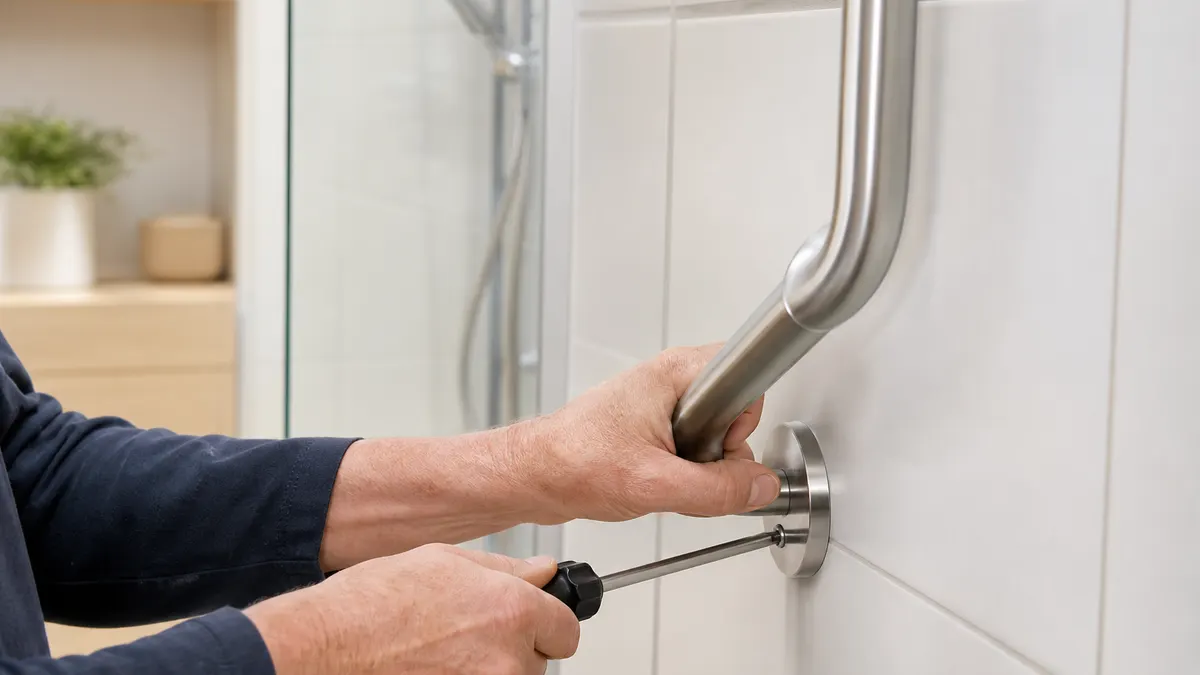
Before adding grab bars or handrails, choose products designed for the job, place them where the user actually needs support, and anchor them to solid structural backing. Getting those three things right matters more than style or price.

Before adding grab bars or handrails, choose products designed for the job, place them where the user actually needs support, and anchor them to solid structural backing. Getting those three things right matters more than style or price.
Grab bars and handrails give people a steady handhold when standing, sitting, climbing stairs, or moving through certain parts of the home. They support everyday activities and play a practical role in accessibility and aging-in-place home modifications.
Choosing the right equipment is only half the job. Correct installation determines whether a bar or rail can be trusted when someone leans on it.
Grab bars provide a secure handhold near showers, bathtubs, toilets, and other suitable spots. They come in various lengths, finishes, and configurations, and they must match both the intended use and the wall structure behind them.
Handrails run along stairways, ramps, and transitions where continuous hand support helps. A good handrail has a suitable height, a comfortable grip, continuity along the route, and secure attachment.
Towel bars and decorative rails are not substitutes. They are not designed to carry a person’s weight and should never be treated as grab bars or handrails.
The most useful locations depend on the person using them, their mobility needs, and the home's design.
Bathroom grab bars can support movement at shower entrances, inside the shower, and beside the toilet.
Placement should account for how the user steps in and out and for the tub’s configuration.
Stairway handrails offer support in both directions, ideally along the full run.
Porches, front steps, and other changes in elevation may benefit from sturdy handrails.
Some layouts call for added support along frequently used routes.
Evaluate these features before buying:
Stainless steel and other corrosion-resistant materials suit damp bathrooms.
Consider diameter, surface texture, and how easily the bar can be held, including with wet hands.
Straight, angled, and other purpose-designed grab bar shapes serve different movements.
Choose finishes that coordinate with fixtures without reducing usability.
A continuous, comfortable profile makes for a better grip.
Confirm the product is suitable for indoor or outdoor conditions.
Review manufacturer load ratings and maintenance requirements.
Appearance should never outrank function, secure attachment, or suitability for the environment.
Grab bar installation takes more than attaching a bar to a convenient wall. A sound installation involves:
Grab bars should be anchored to suitable structural backing or another mounting system specifically engineered for the intended loads. Ordinary drywall anchors should not be assumed adequate.
Planning matters most during renovations. Mounting locations, wall support, waterproofing, and surrounding fixtures should be settled before the walls are closed up, which is one way of avoiding common mistakes during a shower renovation and the rework that follows.
Get a professional assessment if the wall structure is uncertain, the surface is tiled, or plumbing and electrical lines may be present.
Grab bars work best as part of a broader plan for accessible bathroom design. Consider:
During a renovation, grab bars, shower layouts, flooring, and fixture placement can all be planned together. Homeowners interested in making bathroom spaces more accessible and functional can address these details in a single project rather than piecemeal.
Space is often the limiting factor. Thoughtful fixture placement and clear movement paths are key to making better use of limited bathroom space while still leaving room to move safely.
Think about who will use the equipment and how their needs may change:
For individualized recommendations, consult a qualified occupational therapist or another accessibility professional. Remember that grab bars and handrails are supportive features, not guarantees against falls or injuries.
Tip: Buy products specifically designed and specified as grab bars.
Tip: Walk through the user’s actual movements first.
Tip: Locate framing or blocking before drilling, or use an engineered mounting system.
Tip: Test the diameter and texture by hand before buying.
Tip: Choose corrosion-resistant materials and follow care instructions.
Tip: Extend rails along the full route where a steady handhold helps.
Tip: Check the layout with doors fully open and fixtures in use.
Tip: Adjust for each user’s height, reach, and movement.
Common locations include near shower entrances, inside shower areas, beside toilets, and at bathtub entry points. The best positions depend on the user's needs, the room's layout, and the manufacturer's guidance.
Yes, but tile requires care. The installer must locate structural backing behind the tile and drill without cracking it or compromising waterproofing. A professional assessment is wise before drilling into tile.
Grab bars provide a handhold at specific spots, such as around showers, tubs, and toilets. Handrails offer continuous support along stairs, ramps, and other routes. Each is designed and mounted for its own purpose.
Often, yes. If suitable structural support exists or can be added, grab bars can be installed in a finished bathroom. Wall construction, surface materials, and hidden plumbing or wiring will influence the method.
It should feel solid, with no movement or loosening at the mounting points, and it should follow the manufacturer's installation requirements. Because proper anchoring depends on what is behind the wall, a qualified installer can confirm it was done correctly.
A professional is a good idea when the wall structure is unclear, the surface is tile, or plumbing and electrical lines may be nearby. Installers can also advise on placement and mounting methods suited to the intended loads.
The right grab bars and handrails combine suitable products, thoughtful placement, confirmed structural support, and a clear understanding of who will use them. Taking time to plan these details helps the finished installation work well for years.
If you're considering bathroom accessibility upgrades or a larger remodel, T.L. Drewes Renovating and Remodeling can help you talk through your options. Reach out to discuss your home and the improvements that fit your needs.