Contractor in Bucks County, Pennsylvania

Full-Frame vs. Pocket Window Replacement:
What’s the Difference?

Full-Frame vs. Pocket Window Replacement: What’s the Difference?

Quick Answer: Full-frame window replacement removes the old window all the way down to the framing studs, including the exterior trim and, often, some of the surrounding siding. Pocket replacement, sometimes called insert or retrofit replacement, slides a new window into the existing frame and leaves the old frame, trim, and siding in place. Full-frame work costs more and takes longer, but it’s the only option that lets a contractor fix rotted wood, correct a poorly built opening, or resize a window. Pocket replacement is faster, less disruptive, and a smart choice when the existing frame is square, dry, and structurally sound.

Choosing between the two isn’t just about price. It comes down to the condition of what’s already in the wall, how long you plan to stay in the home, and what you’re trying to fix. Below, we break down how each method works, when each one makes sense, and what homeowners in Bucks County and the surrounding area should expect from the process.

What Is Full-Frame Window Replacement?

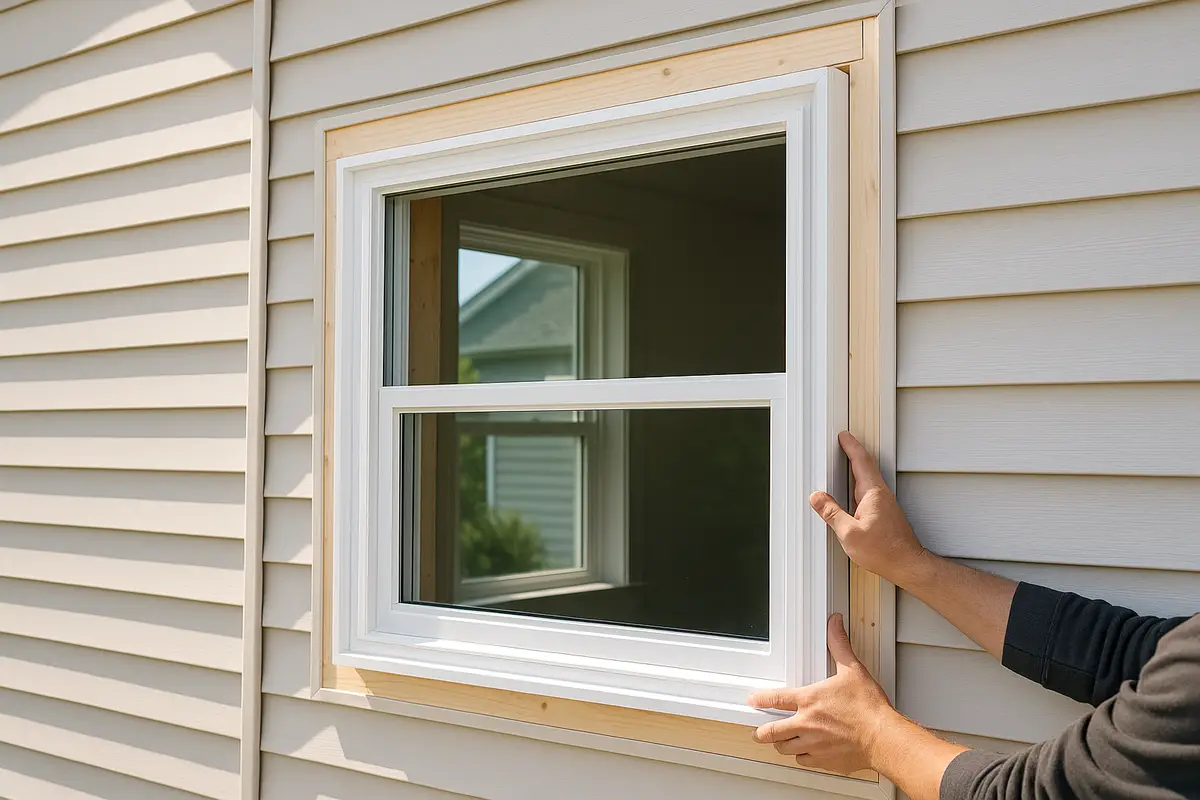
Full-frame replacement, also called a "new construction" replacement, involves removing the entire existing window unit, including the exterior trim, the interior casing, and the frame itself. The installer works down to the rough opening in the wall studs, inspects the framing and sheathing for water damage or rot, makes any necessary repairs, and then installs a brand-new window unit with new flashing, insulation, and trim.

Because the process exposes the structure behind the window, it's the method that gives a contractor the clearest look at what's actually going on inside the wall. That matters more than most homeowners realize, especially in older homes where moisture can sit unnoticed for years.

Advantages of Full-Frame Replacement

  • Allows repair of rotted framing, water damage, or mold hidden behind the old window
  • Makes it possible to resize an opening or change the window style entirely
  • Delivers the best possible seal against drafts and moisture intrusion
  • Restores or upgrades exterior trim and flashing for a cleaner finished look

Drawbacks of Full-Frame Replacement

  • Higher labor and material cost than a pocket installation
  • Longer project timeline, since siding and trim have to come off and go back on
  • More disruption to the home’s interior and exterior during the work

What Is Pocket (Insert) Window Replacement?

Pocket replacement, also known as insert or retrofit replacement, keeps the existing window frame in place. Instead of tearing out the frame down to the studs, the installer removes only the old sashes and inserts a new, slightly smaller window unit into the existing frame, then seals and trims it out. The surrounding siding, exterior trim, and interior casing are typically left untouched.

This method works well when the original frame is still square, free of rot, and properly flashed. It's a common choice for homeowners who want new, energy-efficient glass and hardware without a full construction project.

Advantages of Pocket Replacement

  • Faster installation, often completed in under an hour per window
  • Lower overall cost since less material and labor are involved
  • Minimal disruption to existing siding, trim, and interior walls
  • Ideal for homes where the original frame is still structurally sound

Drawbacks of Pocket Replacement

  • Cannot fix rot, water damage, or a poorly built opening hidden in the wall
  • Slightly reduces the glass area, since the new frame sits inside the old one
  • Not a good option if the existing frame is out of square or damaged

Full-Frame vs. Pocket Replacement: Key Differences at a Glance

Factor

Full-Frame Replacement

Pocket (Insert) Replacement

Frame condition needed

Any condition — frame is removed

Frame must be sound and square

Project time

Longer, more involved

Faster, often same-day

Cost

Higher

Lower

Repairs rot or water damage

Yes

No

Changes window size or style

Yes

No, limited to existing opening

Disruption to siding/trim

Significant

Minimal

When Full-Frame Replacement Makes Sense

Full-frame replacement is the right call when there’s visible or suspected damage around the window opening, such as soft wood, staining, or a musty smell near the sill. It’s also the better option if you want to change a window’s size or shape, switch from a double-hung to a casement style, or add a larger opening to bring in more natural light. Homeowners planning a broader exterior update, like new siding or a home addition, often bundle full-frame window replacement into that work since the wall is already open.

This is also the approach we typically recommend during a full home remodeling project in Princeton, NJ, where windows are being replaced alongside structural, electrical, or exterior updates and it makes sense to address everything behind the wall at once.

When Pocket Replacement Makes Sense

Pocket replacement is the practical choice for homes where the existing frame is still in good shape and the goal is simply to upgrade to better glass, improve energy efficiency, or stop drafts. It’s especially popular for mid-renovation updates, like when a homeowner is already refreshing a room and wants matching, updated windows without opening up the exterior wall.

We often install pocket-replacement windows as part of a kitchen remodel in Princeton, NJ, where the existing window frames are sound and the focus is on updating the space without extending the project timeline.

The same logic applies to a bathroom renovation in Princeton, where a smaller window often just needs new glass and better sealing rather than a full frame-out.

Cost Considerations

Full-frame replacement generally costs more per window because it involves more labor, additional materials for trim and flashing, and sometimes framing repairs. Pocket replacement tends to be more budget-friendly since less of the surrounding structure is disturbed. That said, the cheaper option isn’t always the better value. If a pocket installation is placed into a frame with hidden rot, the problem will keep getting worse behind the new window, which usually costs more to fix later than it would have to address it correctly the first time.

A qualified contractor should inspect the existing frame before recommending either method, rather than defaulting to whichever is faster to quote. Getting this assessment right upfront is what keeps a window replacement from turning into a bigger repair down the road.

Signs It's Time to Replace Your Windows

Not sure whether your windows need attention at all? There are some clear signs that point to window replacement, including drafts you can feel near the frame, windows that are difficult to open or close, visible condensation between panes, and rooms that never seem to hold a comfortable temperature. Catching these signs early makes it easier to plan the right type of replacement before minor issues turn into structural ones.

Comfort, Energy Efficiency, and Noise Reduction

Whichever method you choose, new windows do more than freshen up curb appeal. Modern window upgrades that improve comfort and quiet can noticeably cut down on outside noise, reduce drafts near seating areas, and ease the load on your heating and cooling system. Full-frame installations tend to deliver the tightest seal since the new unit is set into fresh framing and flashing, but a properly installed pocket window with quality glass can still deliver a meaningful improvement over old, single-pane or worn-out units.

Homeowners comparing options like vinyl vs. fiberglass window frames or double-hung vs. casement window styles should factor those choices into the full-frame vs. pocket decision too, since some styles are easier to achieve with one method over the other.

Choosing the Right Option for Your Home

The right window replacement method comes down to the condition of your existing frames and what you’re trying to accomplish. If your frames are sound, pocket replacement gets the job done quickly and affordably. If there’s damage behind the wall or you want to change the window’s size or style, full-frame replacement is worth the extra time and cost. T.L. Drewes inspects every window before recommending a method, so you get a straight answer instead of a one-size-fits-all quote. We install and repair windows throughout Bensalem PA, Ewing Township, Fairless Hills, Holland PA, Lawrence Township, Southampton PA, Yardley PA, and Newtown PA, and we’re happy to take a look at your windows and tell you honestly which approach makes sense for your home.

Frequently Asked Questions

Yes, in most cases. Pocket replacement uses less material and labor since the existing frame, trim, and siding stay in place, which typically makes it the lower-cost option per window.
Not directly. Pocket replacement requires an existing frame to install into, so if a home doesn't have windows yet or the frame has been removed, a full-frame installation is required first.
Slightly. Because the new unit fits inside the existing frame, the visible glass area is a bit smaller than the original. In most homes, the difference is minor and hard to notice from inside the room.
Look for soft or discolored wood around the frame, gaps where caulk has failed, or a musty smell near the sill. A contractor can also check for square corners and proper drainage, which are good indicators the frame can support a pocket installation.
Yes. Full-frame work involves removing trim and siding, repairing the opening if needed, and reinstalling exterior finishes, so it typically takes longer per window than a pocket installation.