Contractor in Bucks County, Pennsylvania

Bathroom Remodel vs. Bathroom Renovation:
What’s the Difference?

Bathroom Remodel vs. Bathroom Renovation: What’s the Difference?

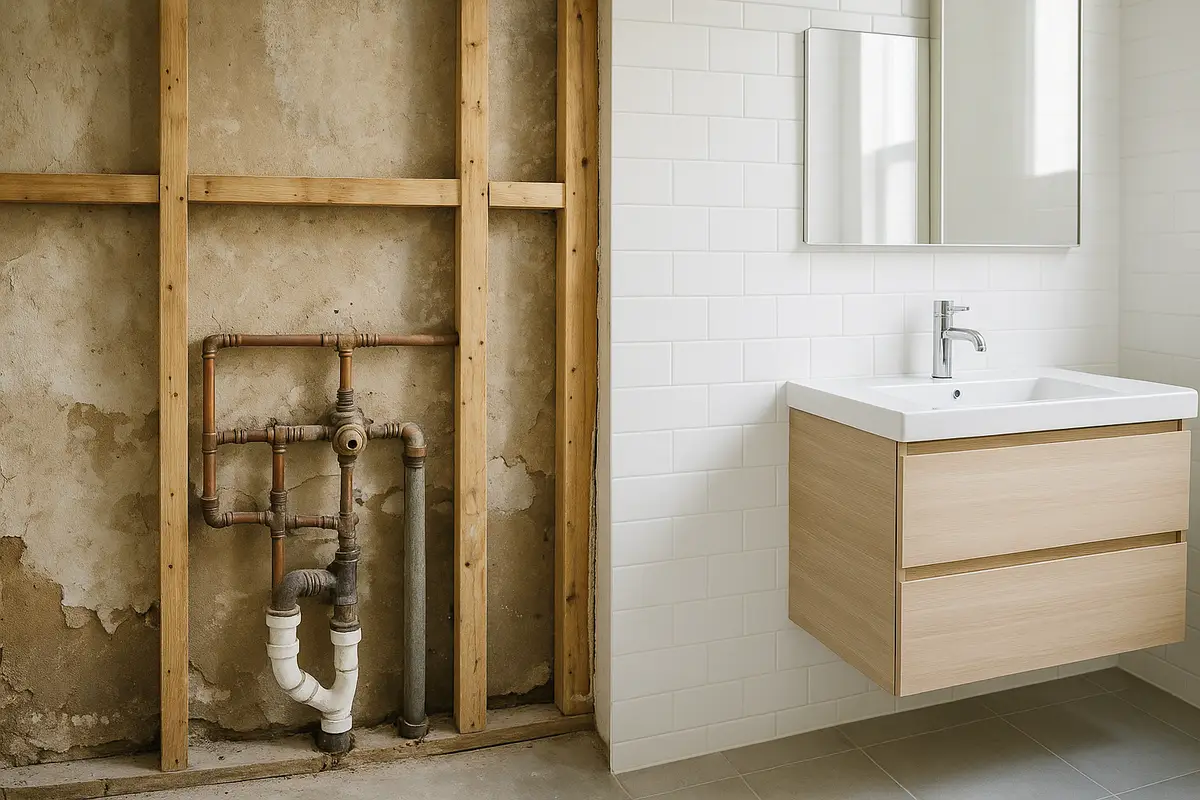
A bathroom remodel changes the room’s layout, plumbing, or footprint — think moving a shower to a different wall or expanding into a closet. A bathroom renovation keeps the existing layout and plumbing in place but replaces the tile, fixtures, vanity, and finishes with something new. Renovations are generally faster and less expensive, while remodels take longer and cost more, but they solve problems a renovation can’t touch.

Key Takeaways

What Does “Bathroom Remodel” Actually Mean?

A bathroom remodel is a structural project. It changes how the room is arranged, not just how it looks. That might mean relocating the toilet or vanity, tearing out a wall to borrow square footage from an adjacent closet, converting a cramped tub-shower combo into a walk-in shower, or reconfiguring plumbing lines so fixtures sit in new positions. Because supply lines, drains, and sometimes framing move, a remodel almost always needs permits and inspections along the way.

Remodels make sense when the current floor plan simply doesn’t work — a door that hits the vanity, a shower too small to use comfortably, or a layout that wastes half the room. If you’re weighing a full shower rebuild against keeping your existing tub, our comparison of choosing between a walk-in shower and a soaking tub breaks down which option fits different households and budgets.

What Does “Bathroom Renovation” Actually Mean?

A renovation works within the room’s existing footprint. The toilet, sink, and shower stay roughly where they are, but everything around them gets refreshed: new tile, a new vanity, updated lighting, modern fixtures, and fresh paint. Because plumbing and framing generally aren’t disturbed, renovations move faster, cost less, and often skip the permitting process entirely.

Most homeowners choose a renovation when the bones of the bathroom are sound but the finishes feel dated or worn. Peeling caulk, outdated tile, and fixtures that no longer match the rest of the home are renovation problems, not remodel problems.

It helps to think of a remodel as changing the question the room answers. Instead of “how do we make this bathroom look better,” a remodel asks “how should this room actually function.” That distinction matters because it changes the scope of the trades involved — a remodel typically brings in a plumber, an electrician, a tile installer, and a general contractor to coordinate the sequence, rather than a single crew handling surface-level updates.

Remodel vs. Renovation: Key Differences at a Glance

Factor

Remodel

Renovation

Layout

Changes

Stays the same

Plumbing / Electrical

Often relocated

Usually untouched

Permits

Typically required

Often not needed

Timeline

4–8+ weeks

1–3 weeks

Cost

Higher

Lower

Best for

Fixing a layout that doesn’t work

Refreshing dated finishes

Which One Does Your Bathroom Actually Need?

A few honest questions can point you toward the right project:

If you’re noticing warning signs but aren’t sure which category your project falls into, our guide on knowing when it’s time for a bathroom remodel walks through the specific red flags worth watching for. It’s also worth reading up on how permits and inspections affect a bathroom remodel timeline if your project involves moving plumbing or walls.

Cost and Timeline: What to Expect

Because a renovation doesn’t touch plumbing or framing, it’s the more budget-friendly and faster option — most renovations wrap up in one to three weeks. A remodel involves demolition, rough-in work, waterproofing, and inspections before tile or fixtures ever go in, which stretches the timeline to four to eight weeks or more depending on how much the layout changes.

Material choices affect both categories. Premium tile, custom vanities, and high-end fixtures raise the cost of a renovation, while a remodel’s price climbs further with every plumbing line that moves and every wall that comes down. Homeowners planning a renovation on a tight budget can typically get the biggest visual impact from new tile, an updated vanity, and improved lighting. A detailed cost breakdown for bathroom projects across Bucks County is a topic worth exploring further for homeowners comparing quotes.

How the Right Choice Affects Resale Value

Both remodels and renovations tend to return a strong share of their cost at resale, but they solve different problems for potential buyers. A renovation signals that the home has been maintained and updated — appealing to buyers who don’t want to tackle projects themselves. A remodel goes further, fixing structural or layout issues that would otherwise show up as a red flag during a home inspection or a buyer walkthrough.

Many homeowners choose to coordinate bathroom work with a kitchen upgrade while contractors are already on site, which can streamline scheduling and reduce overall disruption.

Others fold their bathroom plans into a broader whole-house renovation project, tackling several rooms under one timeline and one point of contact instead of spacing the work out over several years.

Whichever direction fits your home, working with one licensed team for a full bathroom remodeling project keeps plumbing, tile, and finishing work coordinated under a single contractor instead of juggling separate trades and schedules.

Common Mistakes Homeowners Make With Either Project

One of the most common planning mistakes is treating a layout problem as a finishes problem. New tile and a new vanity can make a bathroom look fresh for a while, but if the room was always too cramped or the door swing was always awkward, those frustrations come right back once the new-paint excitement wears off. Homeowners sometimes spend renovation money twice — once on a cosmetic update, then again a few years later on the remodel they needed from the start.

The opposite mistake happens too: over-scoping a project that didn’t need it. Not every dated bathroom requires moving plumbing or knocking down a wall. If the layout genuinely works and the complaint is really about worn finishes, a renovation delivers most of the visual payoff at a fraction of the cost and disruption of a full remodel.

Skipping the planning phase causes problems in both categories. Finalizing tile, fixtures, and paint colors before demolition starts — rather than deciding mid-project — keeps the schedule realistic and avoids the change orders that drive up cost and stretch the timeline in either type of project.

Ready to Start Your Bathroom Project?

Whether your bathroom needs a full layout change or a straightforward refresh, T.L. Drewes Construction brings the same licensed, single-contractor approach to every project — coordinating plumbing, tile, electrical, and finishing work from the first consultation through the final walkthrough. We proudly serve homeowners throughout Bensalem, PA, Fairless Hills, Holland, PA, Southampton, PA, Yardley, PA, and Newtown, PA. Reach out today to talk through your project and figure out whether a remodel or a renovation is the right fit for your home and budget.

Frequently Asked Questions

Yes, typically. A remodel involves plumbing changes, permits, and often structural work, all of which add cost beyond what a straightforward renovation requires. The gap widens further if the project uncovers hidden issues, like outdated wiring or water damage, once the walls are opened.
Yes, as long as it stays in the same location. Replacing a tub with a new one, or swapping a shower door and surround, is renovation-level work as long as plumbing doesn't move.
If the layout itself is the problem — not enough space, an awkward door swing, a shower that's too small — a renovation won't fix it. That's a sign the project needs a remodel.
Most do, especially when plumbing, electrical, or structural elements are involved. Renovations that leave plumbing and framing untouched often don't need one, though local code always has the final say.
Both add value, but a remodel adds more when the existing layout is genuinely a problem for buyers. A renovation is usually the better return on investment when the bones of the bathroom are already solid, since it delivers a strong visual improvement without the added cost of relocating plumbing or reworking the framing.